Showing posts with label Legendary Trees. Show all posts

Monday, November 1, 2010

Baobab Tree or Upside-Down Tree

Baobab Tree or Upside-Down Tree

Baobab or Upside-Down Tree grows in Africa and Australia. The legend says that after it was planted by God it kept moving, so God replanted it upside down. These trees can reach heights of 5 to 30 metres (16 to 98 ft) and have trunk diameters of 7 to 11 metres (23 to 36 ft). The cork-like bark is fire resistant and is used for cloth and rope. The leaves are used for condiments and medicines. The fruit, called "monkey bread", is rich in vitamin C and is eaten. The tree is capable of storing hundreds of litres of water, which is tapped in dry periods. More images after the break...
Mature trees are frequently hollow, providing living space for numerous animals and humans alike. Trees are even used as bars, barns and more. The Baobab also features as the Tree of Life in Disney's "Lion King", and is the centrepiece in Disney's Animal Kingdom.
Via - Link

Sunday, October 24, 2010

The Cannonball Tree

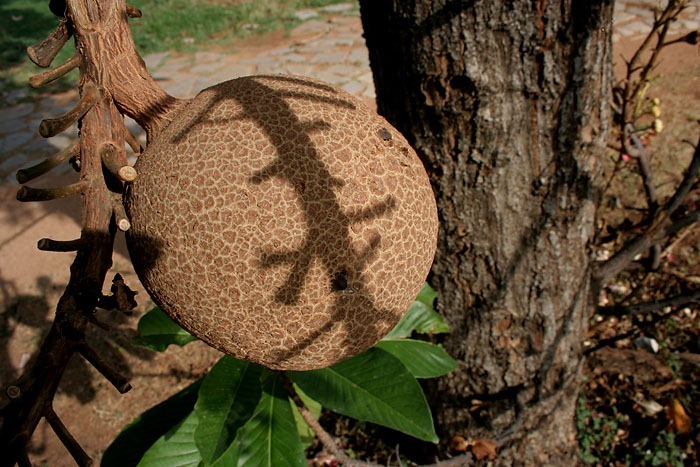
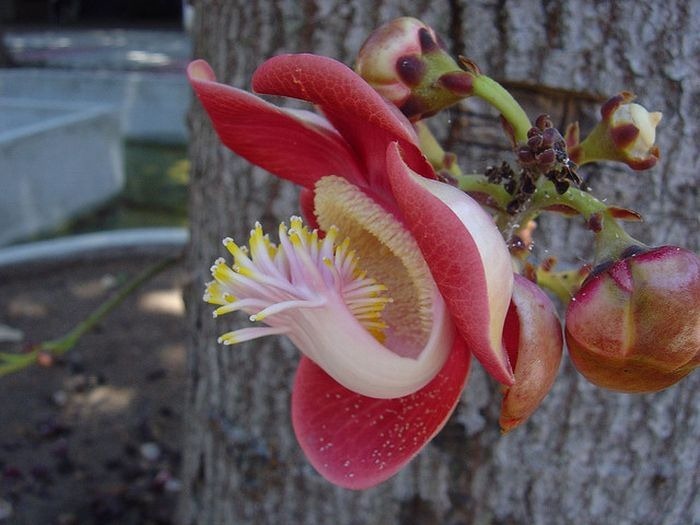
The Cannonball Tree (scientific name: Couroupita guianensis) is a spectacular South American tree to be planted in subtropical and tropical botanical gardens throughout the world. The tree got its name from the shape and size of its fruit which resembles a cannon ball. The fruit is large, spherical and woody ranging from 15 to 24cm in diameter. A single tree can bear as many as 200 or 300 fruits.
cannonball-tree (13)
The fruit when mature falls from the tree and cracks open when it hits the ground, often causing the sound of a small explosion. Like coconut palms, the heavy nut is known to fall without notice and can cause serious injury to any victim who may be unfortunate enough to be under.

Although the Cannonball Tree is believed to be native to the tropical forests of north-eastern South America, according to old Indian texts, the tree has been growing in India for the past two or three thousand years at least hence it is possible that it is native to India also.
cannonball-tree (9)
cannonball-tree (2)
cannonball-tree (3)
cannonball-tree (7)
cannonball-tree (5)
cannonball-tree (1)
cannonball-tree (11)

Wednesday, October 6, 2010

Largest Tree Transplanted

Largest Tree Transplanted
 
WHO:
Senna Tree Company
WHAT:
17.67 m (58 ft) tall
WHERE:
Los Angeles, California, USA
WHEN:
January 20, 1994
The largest tree to be transplanted was an oak tree (Quercus lobata), aged between 180-220 years and measuring 17.67 m (58 ft) tall, 31.6 m (104 ft) wide (branch-span), weighing approximately 415.5 tonnes (916,000 lb) and with a trunk girth of 5 m (16 ft 2 in). "Old Glory" was moved 0.4 km (0.25 miles) by Senna Tree Company (USA) to a new park in Los Angeles, California, USA on January 20, 2004

Monday, October 4, 2010

Coast Redwoods – World’s Largest Trees

Inside the cool Redwood Forest, Rotorua


Redwoods in Rotorua

Picnic under the Magnificent Redwoods
Picnic under the Magnificent Redwoods 

The World's Largest Living Things

The world’s largest and tallest livingthings are the redwood trees in California
, the tallest, Tall Tree, measuring367.8 feet in height and 10 feet in diameter five feet above the ground. Theycan live for more than 2000 years.
The Tall Tree rises higher than a 35 storeybuilding. It boasts engineering that no manmade structure could match, for itrests on a shallow bed of roots that go no deeper than 6 feet and no wider than50 feet from its base. If the tree begins to lean or is damaged at one part ofthe base, it will grow a buttress to compensate for the added load on one side.

Redwoodsin New Zealand

The Coast Redwoods have been cultivated inother areas of the world – including Britain, Europe, Asia, Australia and NewZealand but achieves its majestic heights and lush groupings only in thePacific Coast.
The climate of New Zealand is morehospitable to both the North American sequoias, particularly in the NorthIsland. A 15 acre grove of Coast Redwoods was planted near Rotorua in 1901; itstrees were pruned to a height of 50 feet in 1939, and since then the tallestspecimens have grown to heights of 170 to 185 feet. This redwood grove is partof the 18,000 acre Whakarewarewa National Forest, which is a primary researchstation for timber crop trees, as well as a popular recreational area in NewZealand.

This redwood grove is not intended for useas future lumber since it was dedicated in 1947 as a memorial to all members ofthe New Zealand
Forest Service who died in the two world wars.

The Whakarewarewa Forest Park is one of theoldest exotic forests in New Zealand and is managed primarily for woodproduction. There are fine old stands of eucalyptus, sweet chestnut, larch,walnut and other introduced trees. Tall tree ferns and native shrubs provide anattractive under storey.
The immense height of the Coast Redwood